In the Chinese electric car market — the world’s largest by a wide margin — BYD holds a 27.2% share with sales of 3,484,525 cars in 2025.
The gap between first and second is what sets this market apart: Geely is second on 12.2%, less than half BYD’s share, at 1.56 million cars against 3.48 million.
Electric market shares in China — 2025
| # | Marque | Sales | Share |
|---|---|---|---|
| 1 | BYD | 3,484,525 | 27.2% |
| 2 | Geely | 1,564,562 | 12.2% |
| 3 | Changan | 789,141 | 6.2% |
| 4 | SAIC-GM-Wuling | 772,147 | 6.0% |
| 5 | Tesla China | 625,698 | 4.9% |
| 6 | Huawei HIMA | 588,549 | 4.6% |
| 7 | Chery | 531,413 | 4.1% |
| 8 | Leapmotor | 529,503 | 4.1% |
| 9 | Seres | 422,920 | 3.3% |
| 10 | Xiaomi | 411,837 | 3.2% |
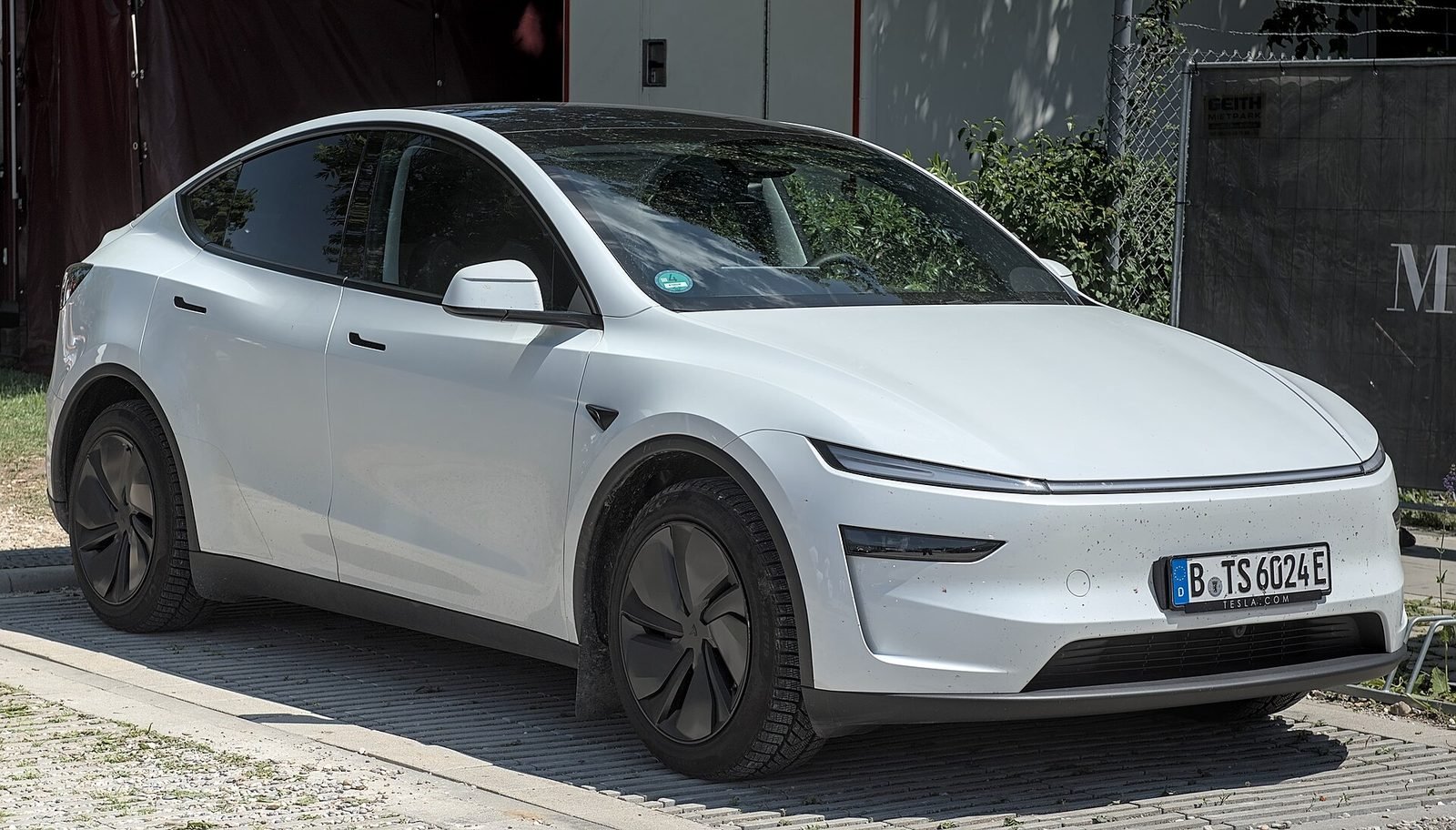
Tesla China is fifth on 4.9% after ranking third on 6.0% in 2024, a 4.8% fall in retail sales. — Source ↗
The most notable shift concerns Tesla: its Chinese share is 4.9% on sales of 625,698 cars, after ranking third on 6.0% in 2024 — a fall to fifth on a 4.8% decline in retail sales.
Tesla is fifth on 4.9% after ranking third on 6.0% — the company that made the market has become a specialist competitor within it.
Which means the company that created the Chinese electric car market now occupies a position closer to specialist competitor than dominant player.
The list itself reveals the market’s structure: ten marques split about 75% of the market, and six of them sit below 5%, meaning a broad tier of mid-sized competitors contesting narrow margins.
That structure is the real engine of the Chinese price war, and it is why those mid-sized competitors in particular — Leapmotor, Xiaomi, Seres and Chery — are expanding overseas faster than the largest players.
For anyone comparing these figures with other markets: shares here are calculated against the new energy vehicle (NEV) market, which covers fully electric and plug-in hybrids together, not battery-electric cars alone. That is a fundamental difference when comparing with Europe or North America.