Formula 1 entered the 2026 season carrying the widest set of technical changes the sport has seen since hybrid power units arrived in 2014. The change is not a single line in the rulebook: the car itself is lighter and narrower, and its power has been redistributed between combustion and electric on something close to an even split.
The headline number is the output of the electric side. It rises from roughly 120kW under the previous rules to about 350kW — close to a threefold increase. The internal combustion engine has been wound back in turn, leaving a power unit split between the two sources at close to 50-50.
The MGU-H has been dropped. That was the heat motor generator unit that recovered energy from exhaust gases, and it was among the most complex and expensive parts of the power unit. Removing it is one of the reasons new manufacturers were persuaded to enter: it lowered the cost and the expertise needed to build a competitive engine.
Dropping the MGU-H lowered the cost and expertise needed to build a competitive engine — and that is what persuaded new manufacturers to enter.
The second change is the fuel, now 100% sustainable. That means a fuel made from non-fossil sources — biological waste, captured carbon or renewable hydrogen — rather than from crude oil. This clause matters more to the Gulf than it first appears, because it puts the regional refining industry in front of a new market, and we return to it in a separate report.
The aerodynamics have moved from a single moveable rear wing to a system that works at both ends of the car. The car switches between a low-drag mode on the straights and a high-downforce mode in the corners. In place of the old DRS, overtaking assistance now comes as extra electric power granted to the car behind.
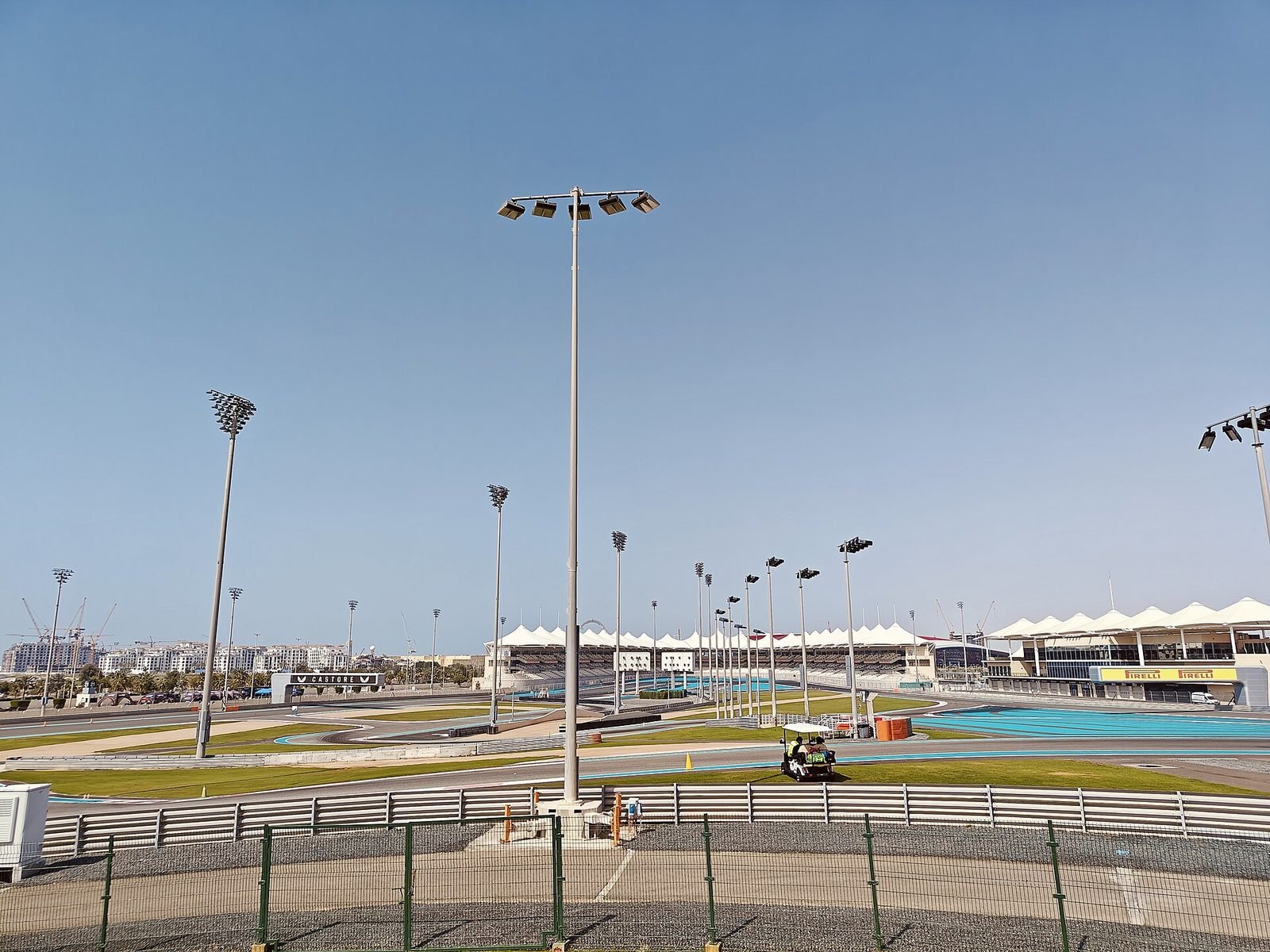
The minimum car weight has fallen from 800kg to 768kg, and maximum width from 2,000mm to 1,900mm. Both look like small numbers on paper, but their effect on tight circuits and on overtaking chances may be larger than the engine change itself.
What changed in the Formula 1 rules — 2025 vs 2026
| # | Item | Through 2025 | From 2026 |
|---|---|---|---|
| 1 | Electric output | ≈120 kW | ≈350 kW |
| 2 | Power split | Mostly combustion | About 50% combustion, 50% electric |
| 3 | MGU-H unit | Present | Removed |
| 4 | Fuel | Partly sustainable blend | 100% sustainable |
| 5 | Aerodynamics | Moveable rear wing (DRS) | Moveable aero front and rear |
| 6 | Overtaking aid | DRS | Extra electric power for the following car |
| 7 | Minimum weight | 800 kg | 768 kg |
| 8 | Maximum car width | 2,000 mm | 1,900 mm |
The largest regulatory shift in the sport since 2014: an electric side approaching the combustion side in output, fully sustainable fuel, and a lighter, narrower car. Qatar and Abu Dhabi are the first two Gulf rounds run under these rules. — Source ↗
For anyone following Formula 1 in the Gulf, the Qatar and Abu Dhabi rounds are the first two in the region to be run under these rules. Doha on 2–4 October comes late enough in the season for the gaps between the teams to have settled, and Abu Dhabi on 4–6 December closes the first year of the new technical era.
The open question is the one the rulebook does not answer: does this package produce closer racing, or does it open a fresh gap between the teams that read the regulations well and those that did not? History says the first year of any major technical change in Formula 1 has always been the most spread-out, before the field gradually converges.