There is a question nobody asks in the showroom and everybody pays for in the workshop: if a part on this car fails in three years, how long until a replacement arrives? The answer ranges from two days to six weeks, and the difference is not one of quality or of origin but of warehousing.
The Gulf aftersales market is worth close to nine billion four hundred million dollars a year, and it grows faster than new-car sales for a simple structural reason: the car parc expands every year even when new sales fall. Every car sold joins a base that needs servicing for a decade or more.
The Gulf parts and aftersales market
2026 estimates
- Annual market size
- 9.4
- Genuine parts share
- 46
- Average annual service spend
- 2.4
- Average fleet age
- 7.8
$bn
% of value
thousand dirhams per car
years
Gulf Auto estimates from fleet size and published service patterns. Aftersales grows faster than new-car sales in the Gulf, for a simple reason: the parc keeps growing every year even when new sales fall.
And yet it remains the least covered market in the trade press and the most consequential for owner satisfaction. A buyer chooses a marque once every four years and deals with its parts chain dozens of times in the same period.
The truest indicator of a new marque’s seriousness is not its showroom count but the number of items in its regional warehouse.
The chain has four stops, and the whole thing turns on the second. The manufacturer’s central warehouse usually sits in the country of origin and serves a continent. The dealer warehouse holds only fast-moving items. The decisive stop is the regional warehouse.
From the production line to the service bay
Four stops stand between a part and your car
- 01
Manufacturer’s central warehouse
Usually in the country of origin. It serves a whole continent on a stock cycle of 45 to 90 days.
- 02
Regional warehouse
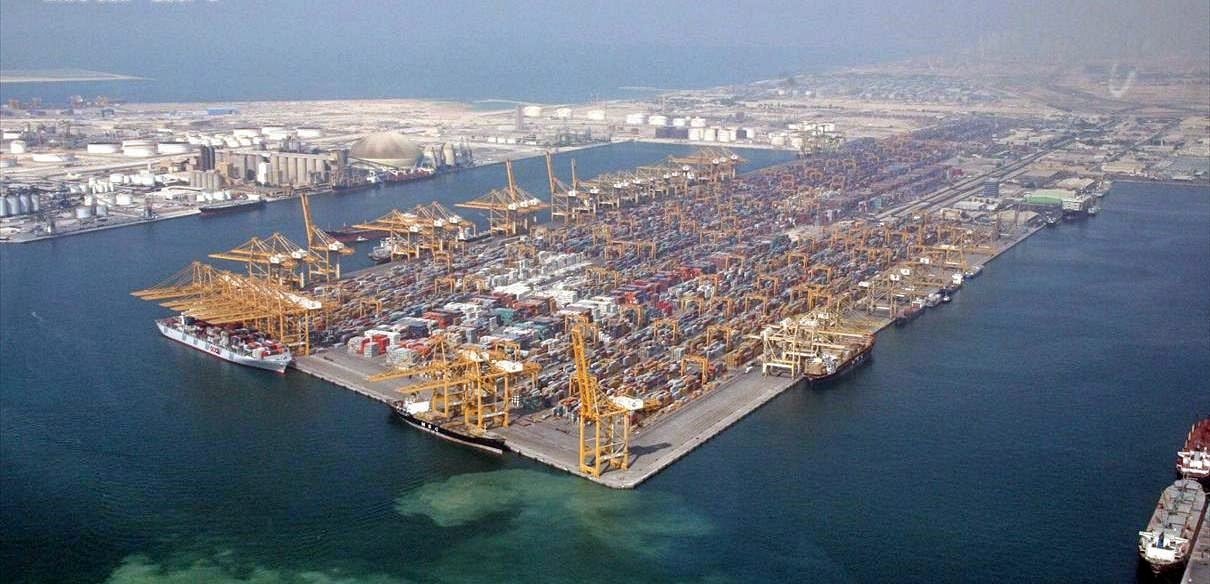
Jebel Ali, Dubai Industrial City, Dammam. This stop sets the speed of the entire market: what is stocked regionally arrives in two days, what is not takes six weeks.
- 03
Dealer warehouse
Holds only fast-moving parts — filters, pads, batteries and glass.
- 04
Workshop or independent retailer
The last link, and the only one the owner sees. A delay anywhere upstream shows up here as a car stuck on the lift.
Gulf Auto description of the Gulf parts chain. The second stop is the decisive one, and it is the real test of how serious a new marque is about the region — not its showroom count.
What settles the owner’s experience is simply this: is the part they need held regionally or not? If it is, it arrives in two days whatever its origin. If it is not, a special order begins — approval, consolidation, sea or air freight, customs clearance.
The numbers are stark. A marque established in the region holds between fifteen and twenty thousand line items locally and covers more than ninety per cent of workshop demand from local stock. A newly arrived marque may hold two thousand, covering under half.
How long a part not held locally takes to arrive
Average days from order to workshop
days — Gulf Auto model built on distribution practice published in the region. The gap between the last row and the one above it is not a difference of quality or of origin but of warehousing — the question buyers of a new marque most often fail to ask.
The truest indicator of a new marque’s seriousness in this region is therefore not its showroom count nor its advertising spend but the size of its regional warehouse and the number of items in it. That figure is not announced at press conferences, but it can be asked directly — and a dealer’s hesitation in answering is itself an answer.
The second layer is the replacement part. The Gulf market holds three categories: the genuine part in the manufacturer’s box, the equivalent part from the same supplier under its own brand — usually the identical part at a lower price — and the commercial part of unknown origin.
The middle category is the most useful to owners and the least understood by them: the supplier that makes brakes for the manufacturer sells the same product in the open market at up to thirty per cent less. What the owner pays extra for in the genuine part is the box and the warranty, not the contents.
The third category is where the real damage happens. Its greatest danger lies not in filters or pads but in safety parts: airbags, suspension components and brake discs. There, the saving is the most expensive thing an owner can buy.
A third dimension is particular to the Gulf: heat. The climate plainly shortens the life of certain categories — batteries, coolants, tyres, wipers and rubber suspension components. Service schedules written for a temperate climate do not transfer here unaltered.
In practice a Gulf owner consumes about a third more parts than a European counterpart in heat-affected categories. That is not a defect in the car but a property of the climate — but it belongs in the cost-of-ownership calculation rather than being discovered later.
What can a buyer do with this before purchase? Three specific questions reveal more than any specification sheet. How many line items does the dealer hold regionally? What is the average time to source a part that is not in stock? And are equivalent parts for this model available in the open market, or does the manufacturer hold them exclusively?
The third question is the sharpest over time. A model whose parts come only from the dealer stays hostage to that pricing for its whole life, while a model that sold widely enough to attract independent suppliers becomes markedly cheaper to run after year three.
Gulf Auto will track this file by its numbers, and in particular the sourcing times declared by each marque — the measure that tells a buyer what the showroom does not.