
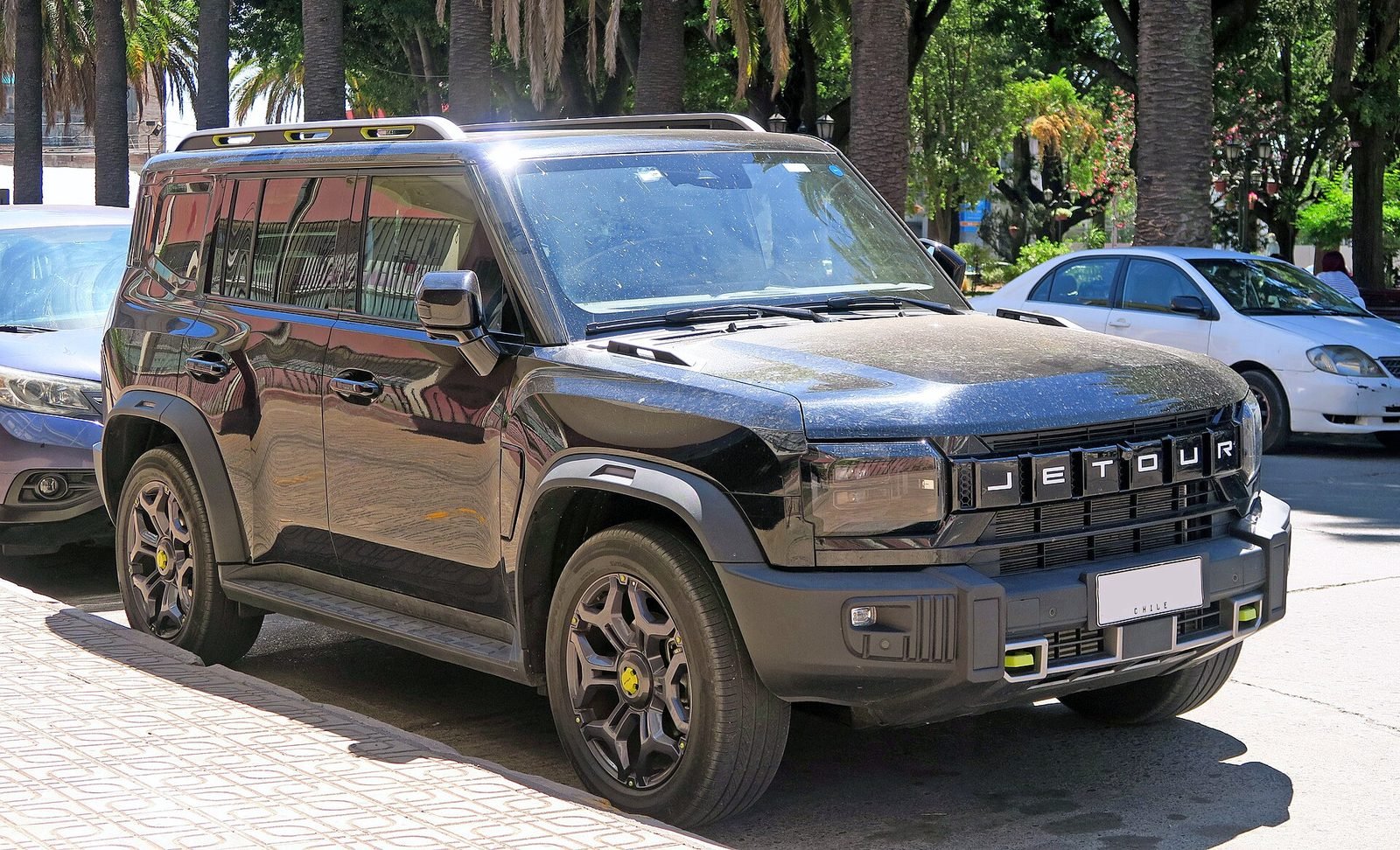
When a rental company announces the addition of three hundred cars to its fleet, the news is usually read as ordinary commercial reporting. It is in fact one of the most powerful brand-building instruments in the car business, and one of the most dangerous to resale value. This report reads both faces.
Fleets account for about a sixth of the Gulf market by volume. But their real weight exceeds that share for three reasons, which we take in turn.
We start with the composition of buyers.
Who buys Gulf fleets?
Each buyer type’s share of fleet sales
- Car rental companies34%
- Delivery and transport firms23%
- Corporate and employee fleets21%
- Government bodies14%
- Hotels and hospitality8%
% of fleet sales — Gulf Auto model. Fleets account for about 16 per cent of the Gulf market by volume, and their real weight is greater: a single fleet deal puts hundreds of cars in front of drivers who would never have tried them, then floods the used market with organised supply three years later.
A model that falls further in the used market than its peers with no visible reason in its quality — the reason is usually that it is a fleet model.
Rental companies lead, and they are the category with the greatest effect on a marque. Delivery and transport firms follow, and they are the fastest-growing in the region on the back of expanding e-commerce and delivery services.
The first reason fleets matter: experience. A single fleet deal puts hundreds of cars in front of thousands of drivers who would never have chosen them in a showroom. And a renter drives the car for days rather than minutes, forming a complete view of it.

That is precisely what a new marque needs: not persuasion by specification but the removal of hesitation through direct experience. Which is why new marques pay heavy discounts to enter rental fleets — they are buying experience, not selling cars.
The second reason: concentrated volume. A single deal may equal a month of showroom sales and arrives in one batch with negligible selling cost. That makes it a useful instrument for clearing inventory or hitting a quarterly target.
The third reason is the most dangerous, and we return to it: the effect on the used market three years later.
Before that, what settles a fleet deal? The decision criteria here differ fundamentally from an individual buyer’s.
What decides a fleet deal
Factor weight out of 100 in a fleet manager’s decision
factor weight out of 100 — Gulf Auto model. Purchase price ranks fifth, not first, and that is the fundamental difference between a fleet buyer and an individual. Fleet deals go to whoever will guarantee residual value in writing — a guarantee no marque with under five years in the market can offer.
Purchase price ranks fifth, not first. That difference is the essence of the gap between a fleet buyer and an individual: the first computes total cost over a three-year cycle including resale value and downtime, the second compares one price with another.
The second criterion — guaranteed residual value — is the real barrier facing new marques. A fleet manager does not want a forecast but a written commitment to a buy-back price in three years. A marque with under five years in the market lacks the data to offer that without serious risk.
And one that offers it anyway is gambling: if its cars fall further than expected, it absorbs the difference. That has happened more than once in other markets and has driven marques out of the fleet sector entirely.
The third criterion — service speed and downtime — is purely operational. A car off the road in a rental fleet loses daily revenue, and a week waiting for a part is a loss measured in dirhams. Which is why a fleet manager asks about the regional warehouse before asking about the car.
Now back to the other face: what happens after three years.
The last link is what makes a fleet deal double-edged. Hundreds of cars of one model entering the used market in one batch create organised supply that depresses that model’s price. The individual owner who bought the same car finds its value falling because of supply they had nothing to do with.
The life cycle of a fleet car
From purchase to the used market in 36 months
- 01
Bulk purchase
A discount of 12 to 22 per cent off retail, in exchange for volume and a single service contract.
- 02
Operation
24 to 36 months. The car covers three times the distance an individual’s car does in the same period.
- 03
Organised resale
Sold in one batch to used-car traders or at auction, often at a price fixed in advance in the purchase contract.
- 04
Market effect
Organised supply of a single model depresses its used price while raising market familiarity with the marque.
Gulf Auto model. The last link is what makes a fleet deal double-edged for a new marque: it builds awareness fast and depresses resale value at the same time. A marque that does not plan for it discovers it three years later, when its used prices fall.
This explains a pattern buyers see without understanding its cause: a particular model falls further in the used market than its peers with no visible reason in its quality. The reason is usually that it is a fleet model.
Which is why a marque that plans well staggers its fleet exits across months rather than one batch, and directs part of them to export rather than the local market. One that does not plan discovers the problem three years later, when its prices drop.
And what does this mean for the individual buyer? Two pieces of advice. First, a used car with fleet origins is not necessarily a poor choice — it is usually serviced regularly and documented — but its price must reflect its higher mileage.
Second, and more importantly, knowing whether the model you are buying new is a widely used fleet model is information with direct financial value: it tells you what will happen to your car’s value in three years.
Gulf Auto will track the scale and cycles of fleet deals in the region, as one of the few indicators that allows used-price movements to be anticipated two or three years ahead.