Open the prospectus of any vehicle project in this region and two terms recur as though they were synonyms. They are not. The difference between a “plant” and an “assembly line” is not linguistic; it is the difference between an industry that takes root and one that remains the last stop on a supply chain beginning somewhere else. This report reads the Gulf’s industrial map through precisely that distinction.
Start with the number that sums up the position: of every hundred new cars registered in the GCC states, six have passed through a manufacturing or assembly facility inside the region. The other ninety-four arrived complete from plants in Japan, Korea, China, Europe or North America, touched in the Gulf only by a customs broker and a pre-delivery technician.
Where Gulf-sold cars are built — 2026
Country of manufacture as a share of new registrations
- Japan and South-East Asia34%
- China23%
- South Korea16%
- Europe12%
- North America9%
- Gulf manufacturing and assembly6%
% of units — Gulf Auto estimate built from the brand mix across the six Gulf markets and the country of manufacture of each model. The split is by units, not value; on a value basis Europe rises to about a fifth because its average price is higher.
That figure is not a verdict of failure. A market of 1.4 million units spread across six countries and dozens of marques does not, by its nature, offer the scale economies that would justify a plant for each brand. A single plant needs at least a hundred thousand units a year to pay for itself, and few marques sell that many across the entire region.
The right question to put to any new regional project is not “how many units will it build?” but “does it have a paint shop?”
But the picture is changing. More projects have been announced in five years than were built in the twenty before them, and most of them are in Saudi Arabia. The reason is not purely economic: the Saudi localisation programme treats vehicle manufacturing as a transformative pillar rather than a standalone commercial venture, and so weighs its case by broader measures than unit margin.
The table below gathers announced capacities for facilities operating and under construction. Reading it requires one important caveat: announced capacity is a design ceiling, not realised output. A plant that announces a hundred and seventy thousand units may build forty thousand in its first year, and that is not a Gulf peculiarity but a rule of greenfield projects everywhere.
Announced capacity of Gulf vehicle plants
Thousand units a year at full run rate — announced or planned, not produced
thousand units/year — Gulf Auto market model — capacities collected from official project announcements and normalised to an annual basis. Announced capacity is a design ceiling, not realised output; in greenfield projects the gap between the two typically exceeds half in the first two years.
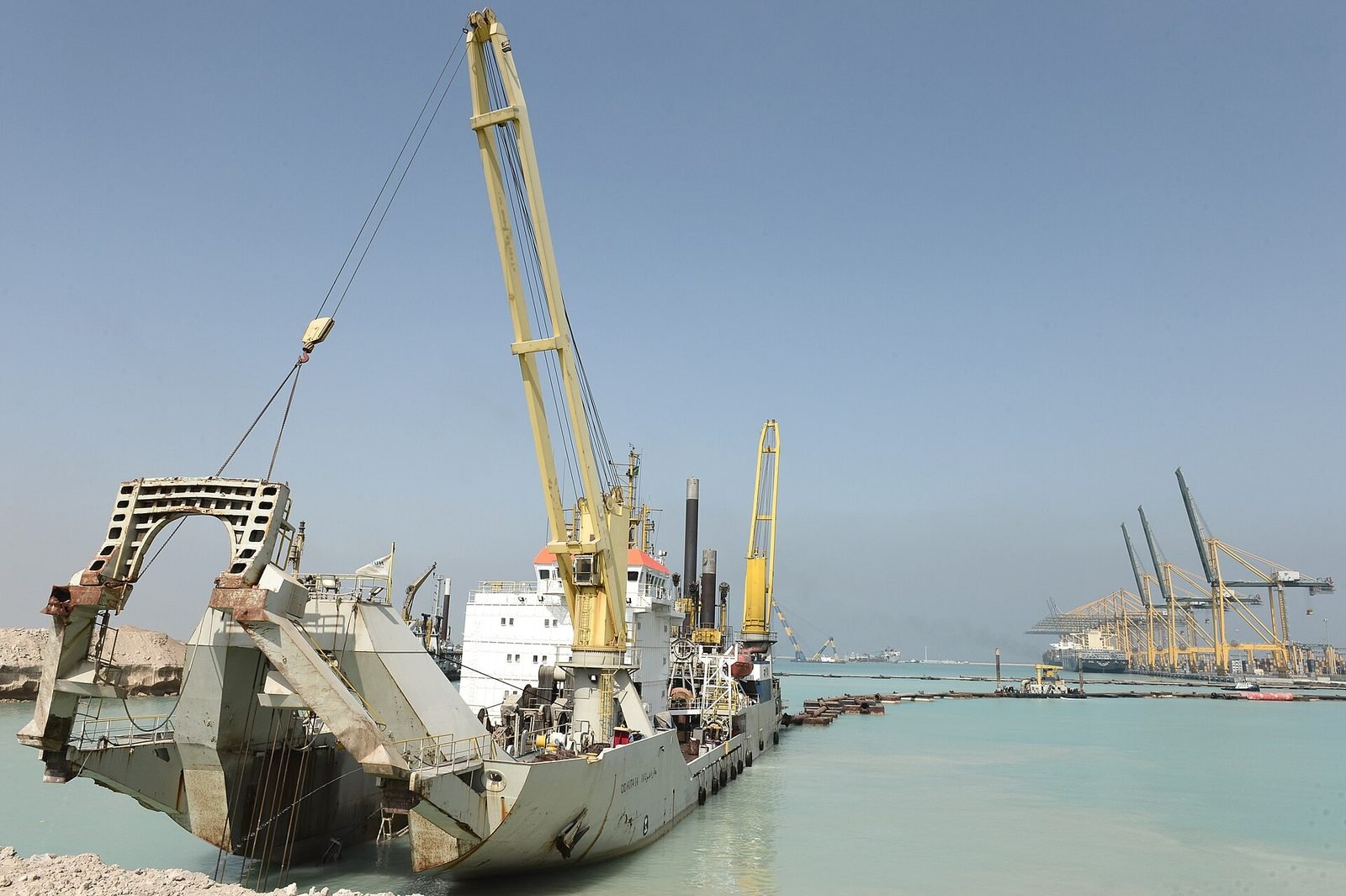
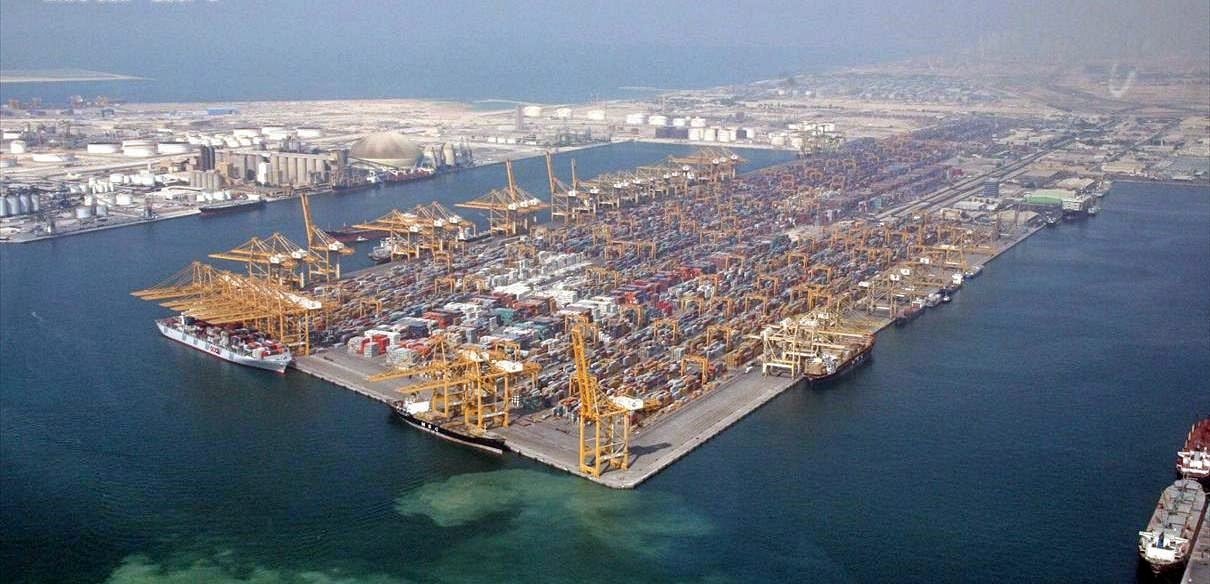
What stands out on this map is how tightly it clusters into a single corridor: the Saudi west coast, the Dammam industrial area and Jebel Ali in Dubai. The reason is plain to anyone who knows how this industry works — a plant needs a deep-water port before it needs labour, because its supply chain arrives by sea and its output leaves by sea.
Which raises the question that precedes all of the above: what does “a plant” mean in the first place? The industry recognises four rungs between full importation and genuine manufacturing, each adding local value and demanding markedly heavier investment. Most of what is called a plant in this region sits on the second rung.
The localisation ladder: four rungs between importing and manufacturing
Each rung adds local value and demands heavier investment
- 01
Fully built unit — CBU
The car arrives complete from its plant. Local value is limited to shipping, customs and pre-delivery preparation.
- 02
Semi-knocked down — SKD
The painted body arrives and major assemblies are fitted locally. Modest investment, local value of 5 to 12 per cent.
- 03
Completely knocked down — CKD
The car arrives disassembled and passes through body, paint and assembly. It requires a full paint shop, the costliest part of any plant.
- 04
Manufacturing and local supply
Local production of seats, wiring, glass and castings. Only here does local value pass a third and the industry begin to take root.
Gulf Auto classification. The third rung is the dividing line: the paint shop alone absorbs between a third and a half of a plant’s capital investment, which is why most regional projects stop at the second.
The decisive rung is the third, and what separates it from the second is a single shop: paint. It is the costliest part of a plant, the heaviest consumer of energy and water, and the most complex environmentally and in regulatory terms. A project that imports a painted body saves a third of its capital investment and pays for it in local value that never passes a tenth.
So the right question to put to any new regional project is not “how many units will it build?” but “does it have a paint shop?” The answer to that one question determines whether we are looking at an industry or at an advanced assembly warehouse.
The second layer of the map matters most over time and features least in announcements: suppliers. A plant does not work alone but atop a pyramid of three supplier tiers. Unless those tiers are built locally, the plant stays a point on a chain rather than its head, and a single port disruption in East Asia remains able to stop its line.
The experience worth studying here is neither European nor American but Moroccan and Turkish. Both countries built an export vehicle industry in twenty years, and both started from the third supplier tier rather than from an assembly plant. By the time the plant arrived, there was something beneath it to hold it up.
The supplier pyramid: what must be built before the plant
The plant is the last link, not the first
- 01
Base materials
Steel, aluminium, polymers and flat glass. Available in Saudi Arabia on the back of its petrochemical and mining base.
- 02
Tier-three suppliers
Castings, pressings and fasteners. A mid-sized workshop industry, and currently the region’s weakest link.
- 03
Tier-two suppliers
Wiring harnesses, seats and sub-systems. Labour-intensive, and usually the first to be localised.
- 04
Tier-one suppliers
Complete modules delivered straight to the assembly line. They follow the plant rather than precede it, and demand volume to justify their presence.
Gulf Auto framework. Most localisation programmes are measured by the number of plants; the better measure is the depth of the pyramid beneath them. An assembly plant on an empty pyramid imports 90 per cent of its value and stays exposed to any shipping disruption.
Against that stands a cautionary counter-model: assembly plants raised in several emerging markets behind tariff protection, which produced cars dearer and poorer than imports, then closed when the protection was lifted. The difference between the two models lies not in the size of the investment but in its purpose. Build to export and you build an industry; build to shelter behind a tariff and you build a reprieve.
Where does the Gulf stand between them? The answer is mixed. The large Saudi projects have been export-oriented since design, which is a healthy sign. But the supplier base remains shallow, and the regional market alone cannot run the announced capacity — which leaves success hanging on whether locally built product can compete in markets that grant it no advantage.
And what does all this mean for the buyer? In the near term, very little: a locally built car will not be cheaper, because set-up costs are loaded onto the first units. Over the medium term the effect appears not in price but in availability: a model built in the region arrives in weeks rather than months, its parts are necessarily stocked locally, and the marque’s support for it is not subject to another market’s priorities.
There is a third effect, less visible and longer-reaching: a plant creates a skills base. A technician who works a paint line becomes, in five years, capable of running a body-repair shop to factory standards — and that is precisely what the region lacks today, more than it lacks plants.
The conclusion we draw from reading the map: the Gulf is at the beginning of a road, not its middle, and the figure worth following over the next five years is not the number of announced plants but the share of local value in a single car. That number alone separates an industry being built from one being announced.
Gulf Auto will update this map annually, revising its figures whenever a project enters real production or falls behind its announced schedule — for delay says as much about the state of the industry as any opening ceremony.