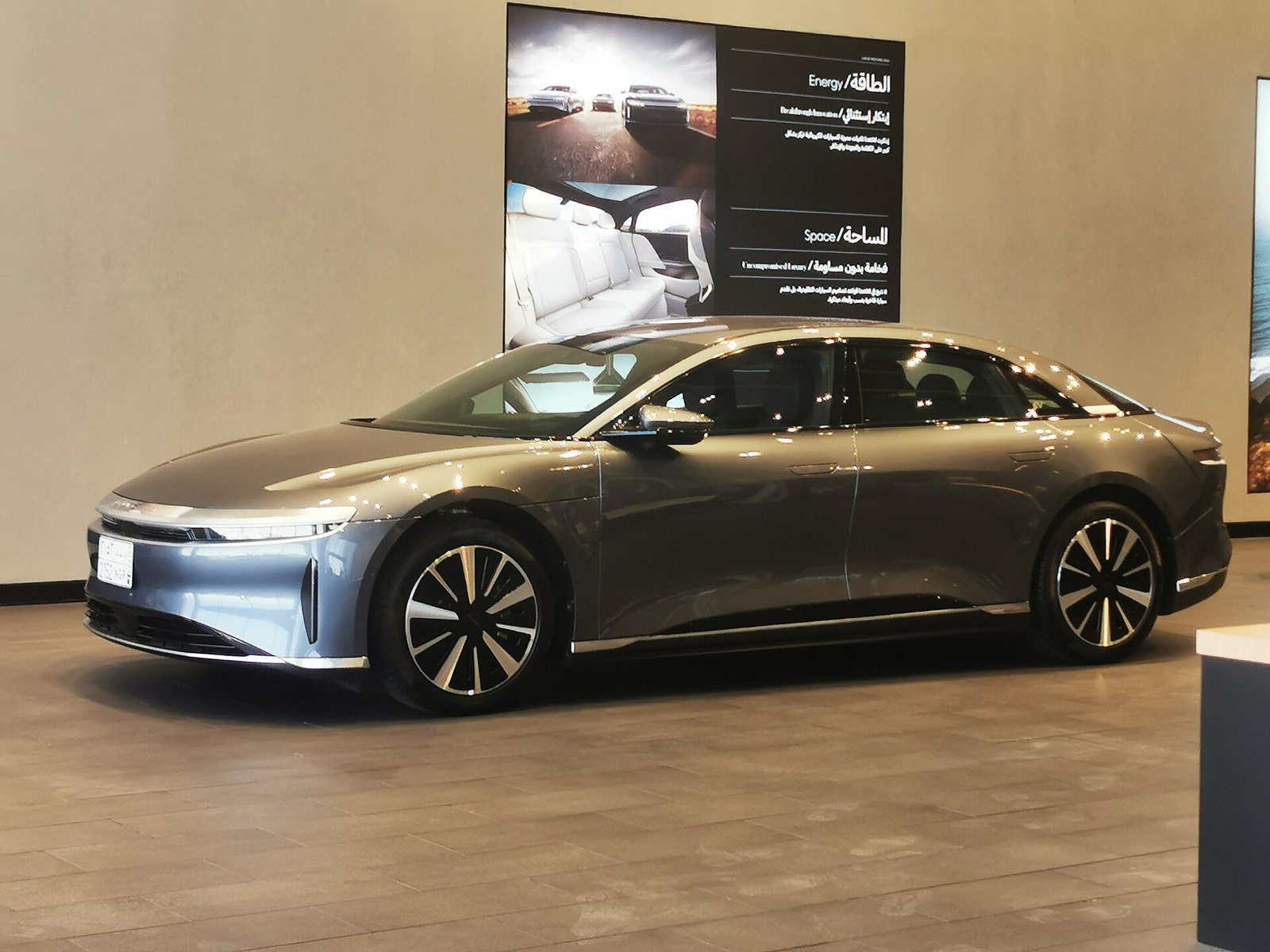

In a single decade the number of showroom visits before purchase fell to a third. That is a large enough number to redefine an entire profession, and yet many showrooms in this region are still built — in layout, staffing and incentives — on the assumption of four visits.
The curve is clear and consistent in direction, and no single year of the ten reversed it.
Showroom visits before purchase
Average visits per transaction
Gulf Auto model. Visits falling to a third in a decade does not mean the showroom matters less; its function changed. It is no longer the place of discovery but the place of confirmation, and the single remaining visit now carries more weight than four once did.
But the common reading of that curve is wrong. Falling visits do not mean the showroom matters less; its function changed. It is no longer the place of discovery but the place of confirmation. And the single remaining visit now carries more weight than four once did, because it comes after the decision is nearly settled.
In the era of four visits a salesperson had three chances to correct a poor impression. Today they have one.
Which means an error during that one visit cannot be recovered. In the era of four visits a salesperson had three chances to correct a poor impression. Today they have one.
Where did the research go? To a range of digital channels, and the most important is not necessarily the most widely used.
Where the Gulf buyer researches
% who used the channel in their most recent purchase journey
% of buyers — Gulf Auto model. The most influential channel is not the most used: owner groups rank sixth in reach and first in their power to overturn a near-settled decision, because they are the only channel the buyer reads as unpaid.
Search engines lead reach without competition, but the channel with the greatest influence is not the most used. Owner groups on messaging apps and community platforms rank sixth in reach and first in their ability to overturn a near-settled decision.
The reason is simple: it is the only channel a buyer reads as unpaid. Advertising is doubted, sponsored reviews are doubted, but an owner complaining about a fault that recurred twice is not.
That explains a phenomenon we observe in this region: a marque may spend millions on a launch campaign and watch market interest collapse within weeks because of a string of complaints in an owner group of a few thousand members. Influence here scales with credibility, not with size.
The second layer of the shift concerns video. YouTube reviews are now the second channel by reach, and the strongest in the stage of narrowing from ten options to three. What distinguishes them is that they show what the showroom does not: the car in use, its faults, and direct comparison.
The content of those reviews has itself changed within a few years. It used to centre on driving and performance; it now centres on cabin, software and equipment against price. That reflects a change in the weights of the purchase decision rather than a change in creators’ tastes.
What does all this mean for a showroom in practice? Three necessary changes. First, that information must be available before the visit: price, equipment, availability. A showroom that hides its price loses the buyer at a stage where it cannot even see them.
Second, that response speed to a digital enquiry must be an operational priority. Replying within the first hour doubles the probability of a visit; replying after two days reaches a buyer who has settled with a competitor.
Third, that the salesperson must be prepared for a buyer who knows more than they do about the model. A buyer who has spent forty days researching may have read details the salesperson has not. A salesperson who tries to conceal that loses the sale in two minutes; one who acknowledges it and checks earns trust.
From screen to delivery
Where buyers leak out of the funnel
- 01
100 researchers
They start from a search engine or a review video. Nothing ties them to a marque yet.
- 02
34 reach a model
They narrow to two or three models. This is where a marque enters the list or leaves it.
- 03
19 request a price or an appointment
First real contact with a dealer. Replying within the first hour doubles the odds of a visit.
- 04
7 buy
Three from the marque they began with, four having switched to another during the journey.
Gulf Auto purchase-funnel model. The number worth noticing is the last: more than half of buyers end up with a marque other than the one they started researching. Pre-visit loyalty is far weaker than marketing budgets assume.
And what about the buyer? The shift brings them a gain and a loss. The gain is that they enter the transaction with information no previous generation had, and that the knowledge asymmetry between them and the seller has narrowed considerably.
The loss is subtler: digital research produces a confidence that sometimes exceeds what the information justifies. Someone who has read fifty reviews believes they know the car; they know what has been written about it. The things that are not written — how the air-conditioning behaves in August, how long a part takes, the quality of the dealer’s service in their own city — remain outside what they read.
Which is why the single visit remains necessary, provided it is used on what the screen cannot answer. A test drive on a real road rather than a lap of the building, direct operational questions, and a look at the workshop itself if possible. That is the value of the remaining visit.
Gulf Auto will track this curve: whether it settles at one visit or falls below will shape the structure of distribution networks in this region over the next five years.