
Between 2019 and 2026 capacity utilisation at Chinese car plants fell from sixty-nine per cent to forty-nine. Over the same period exports rose from one million cars to more than seven million. The two figures are not coincidences standing side by side but two faces of one equation, and understanding it explains most of what has happened to car prices in the Gulf over five years.
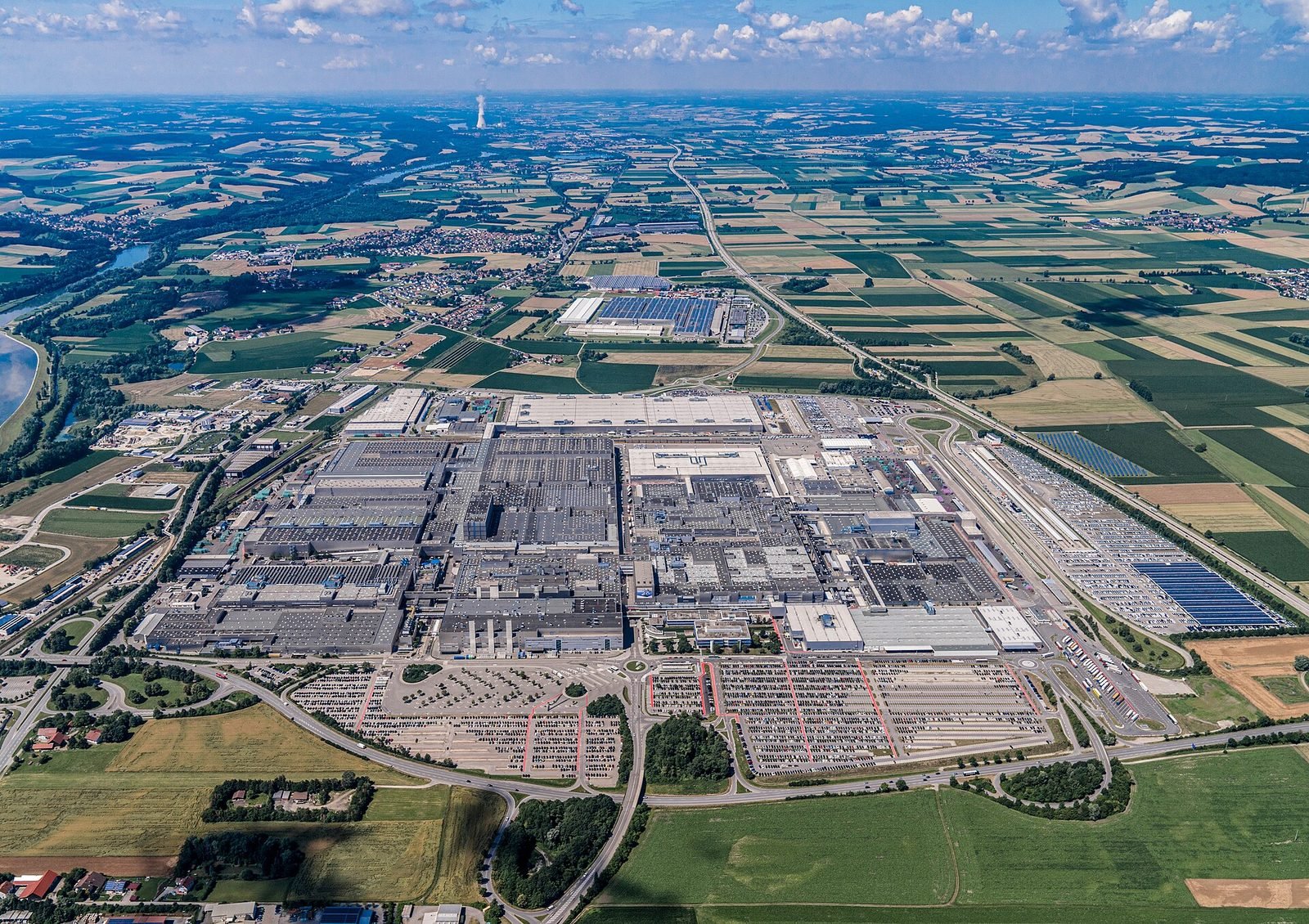
A plant running at half capacity faces a harsh arithmetic: its fixed costs — depreciation, rent, base salaries, debt service — are paid whether or not it builds. So selling an extra unit at a price that covers only variable cost remains better than not selling it.
Capacity utilisation at Chinese car plants
% of installed capacity actually used
- Industry average
- State-owned plants
Gulf Auto estimate from published output and capacity data. A plant running at half capacity loses money on every unit it does not build, so it exports at any price that covers variable cost. That — not manufacturer generosity — is the source of the price the Gulf buyer sees.
That is the mechanism. Not generosity, and not necessarily planned dumping, but the accounting logic governing any plant running below capacity. China’s surplus vehicle-building capacity is estimated at at least ten million units a year — seven times the entire Gulf market.
A Gulf buyer today expects, in an eighty-thousand-dirham car, what they expected in a hundred-and-thirty-thousand-dirham car five years ago.
Where do those units go? To open markets that do not impose high barriers. Europe and North America have partly closed their doors with tariffs, so the weight shifted to the Middle East, South America, South-East Asia and Central Asia. The Gulf is among the most open of these and the most able to pay.
China’s vehicle exports
Million units a year
million units — Gulf Auto estimate from published export data. What this curve means for the Gulf is that the region is no longer marginal in a Chinese exporter’s calculations: the Middle East is now among the three largest export destinations, which explains the acceleration in showroom openings since 2024.
The result the Gulf buyer saw directly: falling entry prices in certain segments on a scale the region has not seen since Korean marques arrived. The electric segment is the most affected, because Chinese competition entered it first and most densely.
But reading these numbers requires care. Part of the decline is not existing models getting cheaper but new models arriving at lower prices and pulling the average down. The German marque did not cut its price; the segment average fell because what is offered in it changed.
What the arrival of Chinese marques did to segment prices
Average starting price in dirhams — 2021 against 2026
dirhams (upper bar 2026, lower bar 2021) — Gulf Auto model from published UAE starting prices. The electric segment fell furthest by a clear margin, because Chinese competition entered it first and most densely. Nominal prices, unadjusted for inflation — so the real decline is larger than it looks.
That distinction matters for anyone studying the market: the lowest price in a segment is not necessarily evidence of a price war, and may be evidence of a segment widening to include tiers it did not previously contain.
What does the buyer gain from all this? A genuine gain, without question: more choice at a lower price point, and equipment that was not available at this price five years ago. That is a net benefit and should be acknowledged without qualification.
But the gain carries three conditions. First, that the marque stays in the market: buying from a brand that withdraws after two years converts the saving into a loss through collapsing resale value. Second, that a real service network is built rather than a sales front. Third, that the low price is not an entry price to be revised once the marque is established.
Which brings the hardest question: what happens if the equation reverses? Spare capacity is not permanent. China itself has begun squeezing struggling plants, and a wave of consolidation is forming. If spare capacity fell by a third, part of the incentive to export at any price would disappear.
The likelier scenario is not a return to former prices but a halt to the decline and relative stability, with growing separation between Chinese marques that have taken root and those that withdraw. The history of car markets suggests a market the size of the Gulf supports six or seven settled Chinese marques, not twenty.
And what does that mean for someone buying today? That the criterion for choosing between Chinese marques should not be price — prices are close — but the probability of staying. Three practical indicators: the size of the regional warehouse, the number of years in the market, and whether the distributor is an established local group or an entity created for the purpose.
At the level of the regional industry, the deeper effect is not on prices but on standards. Chinese marques raised the equipment expected at every price point and forced competitors to follow. A Gulf buyer today expects, in an eighty-thousand-dirham car, what they expected in a hundred-and-thirty-thousand-dirham car five years ago.
That shift in expectation does not reverse. Even if prices rise later, equipment levels will not return to where they were. And that — not the temporary saving — is the permanent gain this wave delivered to buyers.
Gulf Auto will track Chinese utilisation rates as an early indicator of price direction in this region: they register a shift about a year before it appears in price lists.